

Tricks, Treats & Traditions: How Halloween Came to Be
Let's take a little trip through time to see how Halloween became, well... Halloween!
*** It All Began with Samhain ***
Long before trick-or-treating and plastic skeletons, the ancient Celts celebrated a festival called Samhain (pronounced "SAH-win"). Dating back more than 2,000 years, Samhain marked the end of the harvest season and the beginning of the darker, colder months.
The Celts believed that around this time, the boundary between the living and the spirit world became thinner, allowing ghosts and supernatural beings to wander among them. To protect themselves, people lit bonfires, left food offerings, and, according to later traditions, wore disguises to confuse unwanted visitors.
So, Halloween costumes have some seriously ancient roots!
*** From Samhain to Halloween ***
As Christianity spread across Europe, older seasonal traditions gradually blended with Christian celebrations. November 1 became known as All Saints' Day, or All Hallows' Day, making October 31 All Hallows' Eve. Over time, the name was shortened to the much catchier "Halloween."
During the Middle Ages, people in parts of Europe practiced a tradition called "souling," going door-to-door offering prayers for the dead in exchange for small cakes. In Ireland and Scotland, another custom called "guising" involved dressing in costumes and performing songs, jokes, or poems in exchange for treats.
Sound familiar? These traditions helped pave the way for modern trick-or-treating!
*** How Pumpkins Joined the Party ***
Here's a fun Halloween surprise: the original jack-o'-lanterns weren't pumpkins!
In Ireland and Scotland, people carved frightening faces into turnips and other root vegetables, inspired by folklore about a wandering spirit called Stingy Jack.
When Irish immigrants brought their traditions to America in the 1800s, they discovered that pumpkins were plentiful, larger, and much easier to carve. And just like that, the pumpkin became one of Halloween's most recognizable symbols.
Let's face it, carving a giant orange pumpkin sounds a lot more fun than trying to scoop out a turnip!
*** When Halloween Got a Little Sweeter ***
Although trick-or-treating has older roots, the candy-filled version we know today didn't become widespread in America until the mid-20th century.
Before then, children might receive fruit, nuts, homemade goodies, coins, or small toys. After World War II, trick-or-treating grew in popularity, and candy companies began marketing individually wrapped sweets specifically for Halloween.
By the 1970s, packaged candy had become the go-to Halloween treat.
And what about candy corn? This famously divisive little candy dates back to the 1880s! Originally marketed as an autumn harvest candy, it was even sold under the name "Chicken Feed." Whether you love it or leave it, candy corn has certainly earned its place in Halloween history!
*** Celebrate Halloween with a Splash of Color! ***
From ancient bonfires to glowing pumpkins and colorful candy, Halloween has always been a celebration of imagination, tradition, and a little bit of mystery.
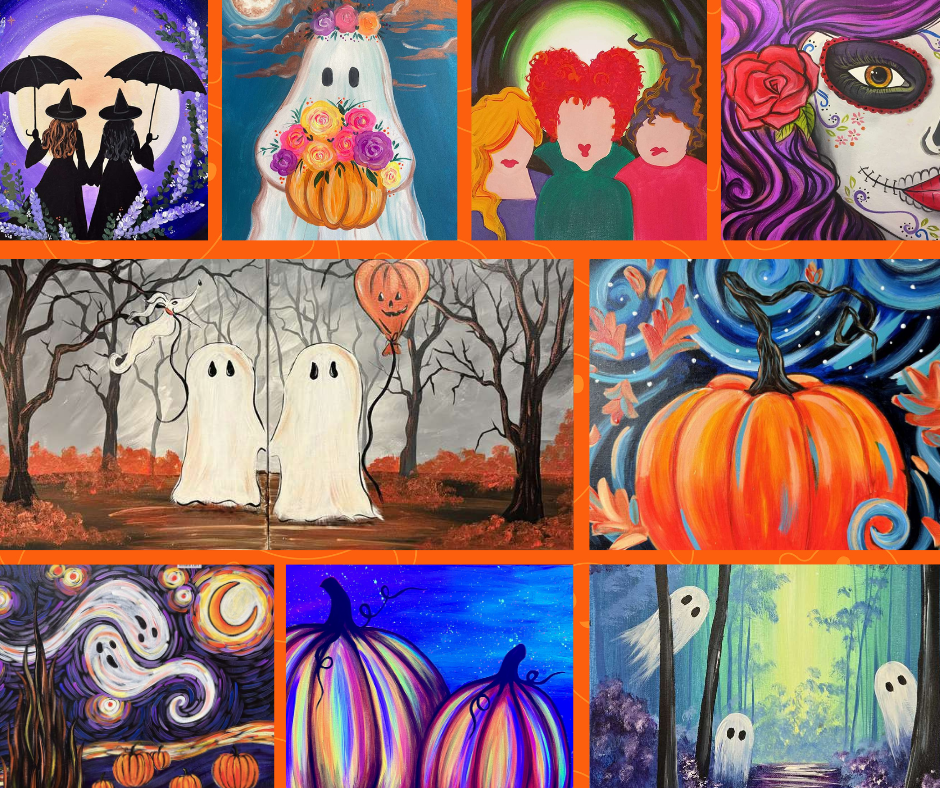
At Pinot's Palette South Hill, we're keeping that creative spirit alive with a calendar full of Halloween and fall-inspired paintings!
You can see some of the many upcoming paintings, above (*and all of them on our calendar, linked below)
Whether you're in the mood for something spooky like Haunted Forest, Spooky Gnome, or Van Gogh's Starry Night – Halloween, or prefer the cozy autumn charm of Autumn Sunset and Enchanted Pumpkin, there's something for every seasonal mood. Gather your friends, enjoy a drink, and create your own festive masterpiece to take home. After all, some of the best Halloween treats aren't made of candy... they're made with a paintbrush!
Happy Halloween and happy painting!
Share Check out our class calendar | Book a Halloween party!