

Painting Through the Seasons: An Impressionist's View
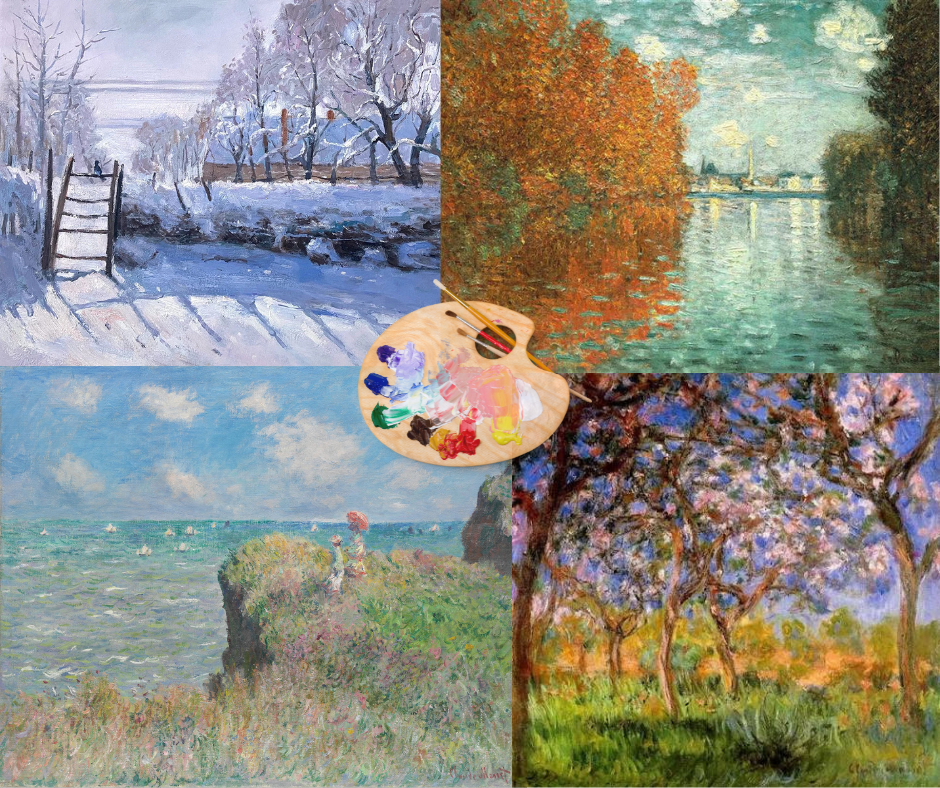
Rather than painting landscapes with perfect detail, artists like Claude Monet, Camille Pissarro, and Alfred Sisley focused on capturing the feeling of a moment. Their loose brushstrokes, vibrant colors, and love of nature helped transform ordinary seasonal scenes into extraordinary works of art.
SPRING: A Celebration of Color and New Beginnings
Spring was a favorite subject for Impressionist painters, with its blooming gardens, fresh greenery, and soft sunlight.
Claude Monet especially loved painting flowers and gardens, including his famous garden at Giverny. His paintings captured the gentle beauty of nature awakening after winter, using delicate pinks, greens, blues, and purples to create peaceful, colorful scenes.
Rather than carefully outlining each petal or leaf, Impressionists used quick, expressive brushstrokes to suggest movement and the freshness of springtime.
SUMMER: Capturing Sunshine and Light
Summer gave Impressionist artists the perfect opportunity to experiment with bright colors and shifting sunlight.
Monet often painted rivers, gardens, and sunlit landscapes, carefully observing how light changed throughout the day. His famous water lily paintings beautifully demonstrate his fascination with reflections, color, and the movement of water.
Artists like Pierre-Auguste Renoir also celebrated summer through cheerful outdoor scenes filled with people enjoying warm afternoons and leisurely gatherings.
Their paintings remind us of the simple pleasures of summer: sunshine, colorful scenery, and time spent outdoors.
AUTUMN: Warm Colors and Changing Landscapes
As summer faded, Impressionist painters found new inspiration in autumn's rich reds, oranges, yellows, and golden browns.
Camille Pissarro frequently painted countryside landscapes, tree-lined roads, and rural villages, capturing the changing atmosphere of the seasons. His textured brushstrokes and warm colors brought a wonderful sense of life to autumn scenery.
For Impressionists, fall wasn't simply about painting colorful leaves. It was about capturing the softer sunlight, crisp atmosphere, and peaceful feeling of nature preparing for winter.
WINTER: Finding Beauty in the Quiet
Even the coldest months offered plenty of inspiration. Impressionist artists embraced snowy landscapes, frosty trees, and the subtle colors of winter skies.
Monet's famous painting The Magpie is a beautiful example, depicting a quiet, snow-covered landscape filled with delicate blues, purples, and soft shadows.
Rather than painting snow as simply white, Impressionists explored the many colors reflected in its surface, creating winter scenes that felt both peaceful and full of life.
*** Celebrating the Seasons, 100 Years Later
2026 marks the 100th anniversary of Claude Monet's death, yet his love of nature and fascination with changing light continue to inspire artists today.
One of the most beautiful things about Impressionism is its reminder that every season has something special to offer. Whether it's spring flowers, summer sunshine, autumn leaves, or winter snow, there's always something worth capturing on canvas.
And you don't need to be a professional artist to enjoy painting the beauty of the seasons!
Paint the Seasons at Pinot's Palette South Hill!
Feeling inspired? At Pinot's Palette South Hill, we love celebrating nature's changing beauty through colorful, creative painting experiences!
With seasonal paintings, dreamy landscapes, and beautiful nature-inspired artwork, there's always something wonderful to create. Check out upcoming classes like Fall Moon on November 2, Colors of the Forest on November 3, and Japanese Crimson Winter on November 5 for a little seasonal inspiration!
Our talented instructors guide you step by step, making it easy to explore beautiful colors, creative brushstrokes, and your own artistic style. No painting experience necessary!