

The Scream: The Story Behind the World’s Most Famous Face of Fear
Read up on the timeless and infamous painting, 'The Scream' (Edvard Munch), then join us in the studio to make some haunting artwork for yourself!
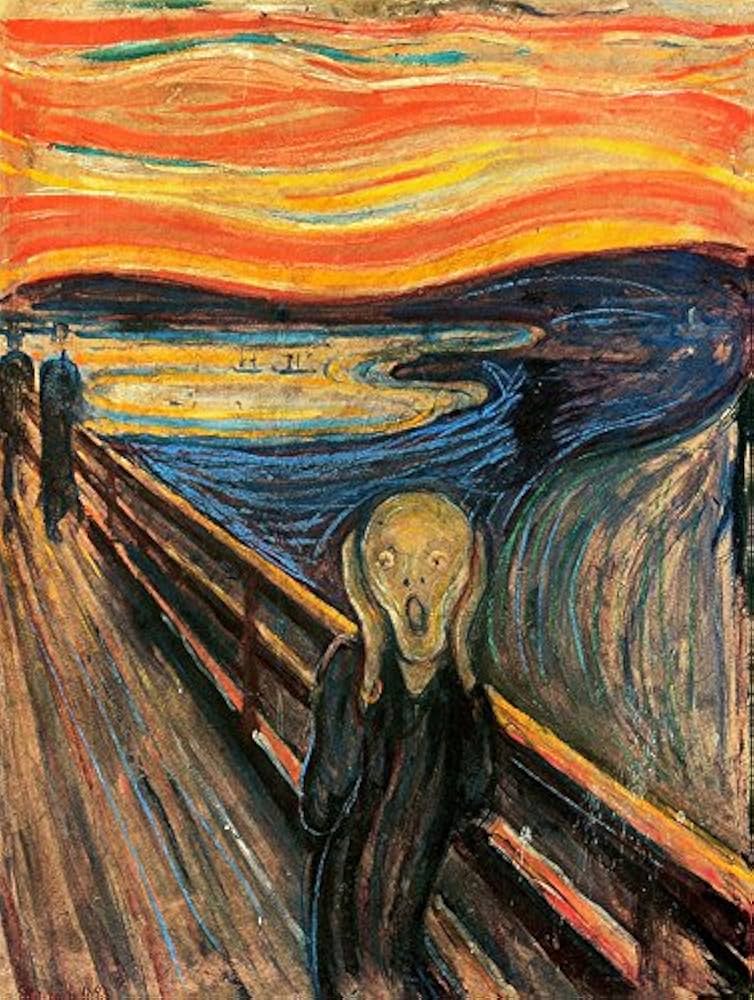
---> What inspired the creation of this haunting masterpiece, and why does it continue to resonate over a century later?
*** THE CREATION ***
Painted in 1893, The Scream draws from a moment of deep anxiety that Munch experienced while walking by a fjord in Oslo, Norway. Munch vividly described the feeling of a powerful scream echoing through nature in his diary. This description captures the overwhelming emotion conveyed in the painting, extending beyond the central figure to evoke a sense of unease within the sky and landscape.
The likely setting for the painting's inspiration was Ekeberg Hill, overlooking Oslofjord, where Munch often walked. The reddish hue of the sky may have been influenced by the aftermath of the 1883 Krakatoa volcanic eruption, which caused dramatic sunsets globally.
*** THE BIRTH OF EXPRESSIONISM ***
Munch delved into emotions rather than strict realism long before formal expressionism emerged as an art movement. This art style is characterized by bold, exaggerated colors, distorted forms, and strong brushstrokes used to convey intense emotions, and its influence spread across Europe and beyond.
*** OBSERVERS' REACTIONS ***
Interestingly, Munch created multiple versions of The Scream, including two paintings and two pastels between 1893 and 1910. One pastel version fetched nearly $120 million at a 2012 auction, ranking among the most expensive artworks ever sold.
The Scream broke new ground by prioritizing emotion over traditional notions of beauty, accuracy, or technique. The dynamic brushwork and distorted perspective reflected the artist's inner turmoil, departing from the calm, structured compositions of the late 1800s.
Initial reactions to the piece were mixed, with critics in Berlin finding it "unsettling" and "incomplete." However, this raw emotional authenticity, seen by some as madness, became Munch's signature. Today, The Scream is celebrated as a pivotal modern artwork, symbolizing anxiety and the human experience visually.
*** STOLEN ARTWORK ***
Beyond its artistic significance, The Scream has a tumultuous off-canvas history, having been stolen twice. Thieves breached the National Gallery in Oslo during the 1994 Winter Olympics, leaving a note criticizing security. A decade later, another version was taken from the Munch Museum in broad daylight. Although both thefts ended with the recovery of the paintings, they were not without damage and dramatic heist-like incidents.
*** PARODIES ***
Over time, The Scream has become a pop-culture icon, inspiring numerous parodies and adaptations across various mediums.
These parodies resonate due to The Scream's enduring presence in visual culture, making it instantly recognizable. Whether for comedic effect or thoughtful commentary, the lasting impact of that iconic scream transcends language barriers to communicate a universally understood human emotion.
** Its iconic wide-eyed, gaping-mouthed figure has been reimagined in:
--- The popular Scream emoji, a direct reference to Munch's creation.
https://remo...es/the-scream
--- The Simpsons' humorous take on "The Scream," featuring Homer in place of Munch's figure against a playful background.
https://emil...ular-culture/
--- Various pop culture crossovers with characters like Ghostface, SpongeBob SquarePants, and (one of our faves...): Kevin From Home Alone.
Buy a 'SpongeBob' Scream poster: https://www....7453110.LVTDI
--- Commercial uses where brands use The Scream to symbolize anything from horror movies to unexpected sales.
*** EVERLASTING RELEVENCE ***
More than a century later, The Scream remains strikingly relevant. Its themes of anxiety, isolation, and the chaos of modern life continue to resonate in a world saturated with stimuli and information overload. Munch captured an emotion that is both deeply personal and universally relatable.
Beyond being a mere painting, The Scream offers an immersive experience. Viewing it elicits not just visual observation but emotional connection, inviting viewers to not only see but truly feel the essence captured within the artwork.
Share Come Paint A Masterpiece Of Your Own | More About 'The Scream'