

Forever in Full Color: Celebrating the Wonderful World of Yayoi Kusama
"She didn't just make people look at art; She made people want to step inside it."
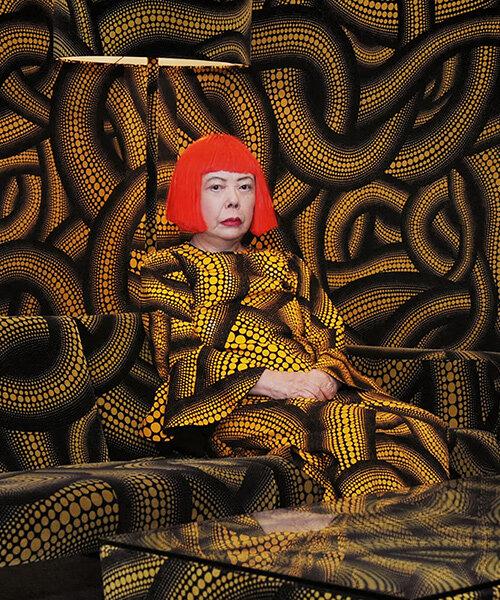
Japanese artist, Yayoi Kusama, died on August 14, 2026, at the age of 97, after a career spanning more than seven decades. Remarkably, according to her studio, she continued painting until the final days of her life.
... And somehow, “97 years” still doesn’t feel long enough for a woman whose favorite subject was infinity.
*** She Made the Ordinary Impossible to Ignore ***
Dots. Pumpkins. Mirrors. Flowers. Nets.
Kusama had a remarkable ability to take simple things and multiply them until they became something completely different.
A pumpkin was no longer just a pumpkin. A polka dot wasn't merely a pattern. A mirrored room could suddenly feel as though you had stepped beyond the limits of the universe.
Her famous Infinity Mirror Rooms surrounded visitors with reflections, lights, and repeating images that seemed to continue forever. Her paintings contained hundreds or thousands of repeated marks, while her enormous dotted pumpkins became some of contemporary art's most recognizable sculptures.
There is something wonderfully playful about it all.
Kusama reminded us that art doesn't always have to sit quietly on a wall asking to be understood. Sometimes it can surround you. It can sparkle. It can be enormous. It can make you laugh, pull out your phone, or feel very, very small in the best possible way.
*** The Polka Dots Had Something to Say ***
Of course, the dots weren't simply decoration.
Kusama began experiencing visions and hallucinations as a child, including patterns that seemed to spread across the world around her. Those experiences became part of the visual language she used throughout her life. She developed what she called “self-obliteration” (**the idea of dissolving the boundaries between ourselves and everything around us through endless repetition.))
It sounds intensely philosophical ... And then she covered a giant pumpkin in polka dots.
That combination may be one reason her work connected with so many people. Kusama explored enormous ideas—identity, existence, infinity, life, death, and our place in the universe—while creating something colorful, strange, and genuinely fun to experience.
*** She Never Really Stayed in One Box ***
Calling Kusama a painter barely begins to describe her.
Throughout her career, she created paintings, sculptures, installations, performances, films, fashion, poetry, and fiction. After moving to the United States in the late 1950s, she became part of New York's avant-garde scene, creating experimental installations, performances, and anti-war happenings. Later, she returned to Japan and continued working on an extraordinary scale.
Even in her 80s and 90s, she wasn't simply revisiting old ideas. Her My Eternal Soul project eventually grew to roughly 900 paintings, and in 2021 she began another series titled Every Day I Pray for Love.
---> That's a pretty great reminder for every creative person: There is no expiration date on making something new.
*** An Artist Who Made People Want to Experience Art ***
Perhaps one of Kusama's greatest accomplishments was making contemporary art exciting to people who might never describe themselves as “art people.”
Her exhibitions became cultural events. People waited in long lines to spend a few moments inside her mirrored rooms. They traveled to see her pumpkins. They photographed themselves surrounded by dots.
A major Kusama exhibition at Australia's National Gallery of Victoria recently attracted more than 570,000 visitors, setting a new attendance record for the museum.
That's an incredible legacy.
She didn't just make people look at art; She made people want to step inside it.
Infinity Doesn't Really Have an Ending
There is something strangely appropriate about celebrating Kusama rather than simply mourning her.
She spent a lifetime creating images of things that repeat forever: dots without edges, reflections without endings, and patterns stretching beyond what we can see.
And now those dots are everywhere....
They're in museums, parks, and galleries. They're on giant pumpkins and mirrored walls. They're in photographs from millions of visitors who stepped into her installations and briefly felt like they were floating through another universe.
Yayoi Kusama may be gone, but the world is permanently a little stranger, brighter, and more colorful because she was here.
(( And perhaps that's one of the loveliest things an artist can leave behind. ))
*** So Many Bright Lights, Gone Too Soon ***
Kusama’s passing comes during what has felt like an especially difficult stretch of goodbyes. In just a matter of weeks, we have also lost Dolly Parton, Tim Curry, and Gloria Steinem... three very different people who, in their own ways, made the world brighter, more interesting, and more open.
Parton gave us music, laughter, generosity, and an extraordinary commitment to children’s literacy; Curry showed generations that being wonderfully weird, theatrical, and entirely yourself was worth celebrating; and Steinem spent her life pushing for equality and helping others find their voices.
Along with Kusama (*who spent nearly a century filling the world with color, imagination, and her belief in the power of love) they remind us how much one person can add to the world simply by creating, caring, speaking up, and refusing to be anything less than themselves. Their absence is deeply felt, but thankfully, so is everything they left behind.