

From Tricks to Treats: How Candy Became a Halloween Tradition
Believe it or not, Halloween wasn't always the sugar-filled celebration we know today. In fact, the tradition of handing out candy is surprisingly recent!
So, how did we go from spooky superstitions to pillowcases overflowing with chocolate? Let's unwrap a little Halloween history
~~~~ It All Started with Ghosts (Not Candy!) ~~~~
Halloween's roots stretch back more than 2,000 years to the ancient Celtic festival of Samhain (pronounced "SAH-win"). Celebrated around October 31, it marked the end of the harvest season and the beginning of winter. People believed the boundary between the living and the dead became thinner during this time, allowing spirits to wander among us.
To ward off unwanted ghostly visitors, people lit bonfires and sometimes wore disguises. Sound familiar?
Centuries later, European traditions like "souling" and "guising" involved people going door-to-door, offering prayers, songs, or performances in exchange for food or small gifts. These customs helped lay the groundwork for modern trick-or-treating.
~~~~ When Tricks Were More Popular Than Treats ~~~~
By the early 1900s, Halloween had become a popular celebration in America, but it wasn't always the wholesome neighborhood event we know today.
In fact, Halloween was once a night of serious mischief! Pranks ranged from harmless tricks to vandalism, especially during the 1920s and 1930s.
To keep kids out of trouble, communities began encouraging organized Halloween celebrations, including costume parties and door-to-door trick-or-treating. The idea was simple: give children something fun to do (and a little treat), and hopefully they'd skip the tricks!
~~~~ So, When Did Candy Take Over? ~~~~
Here's the surprising part: Candy didn't become the star of Halloween until the 1950s!
Early trick-or-treaters might receive homemade cookies, popcorn balls, fruit, nuts, coins, or even small toys. There was no guarantee of a chocolate bar waiting behind every door!
After World War II, trick-or-treating became increasingly popular, and candy companies spotted a golden opportunity. Individually wrapped sweets were affordable, convenient, and easy to hand out to large groups of costumed children.
By the 1970s, concerns about homemade treats helped make commercially wrapped candy the preferred Halloween handout. And just like that, those miniature chocolate bars became Halloween royalty!
Fun fact: Candy corn dates back to the late 1800s, long before Halloween became the candy-centered holiday we know today. It wasn't even originally sold exclusively as a Halloween treat!
A Little Something Sweet (and Creative!) for Halloween
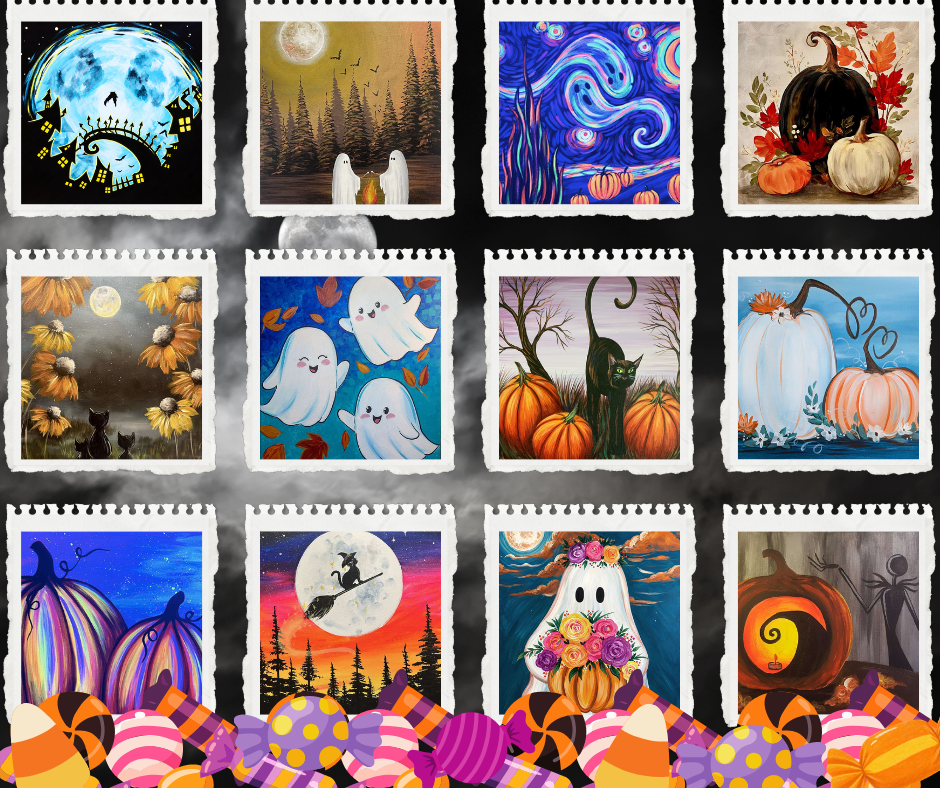
Halloween traditions have certainly changed over the centuries, but one thing has remained the same: it's a wonderful excuse to have a little fun! Whether you're dressing up, indulging in your favorite candy, or decorating your home for fall, there's something magical about this time of year. At Pinot's Palette Federal Way, we're celebrating with a creative twist! Our October painting calendar is packed with spooky and seasonal artwork, from glowing pumpkins and playful ghosts to enchanting Halloween nights and beautiful autumn scenes. Join us for festive favorites like Glowing Pumpkins, Halloweenville II, and Ghostly Gardens, or choose a cozy fall-inspired painting instead. Gather your favorite people, sip something delicious, and create a seasonal masterpiece of your own. After all, Halloween treats don't have to come in a candy wrapper!
Share See Everything on Our Calendar | Book A Halloween Celebration